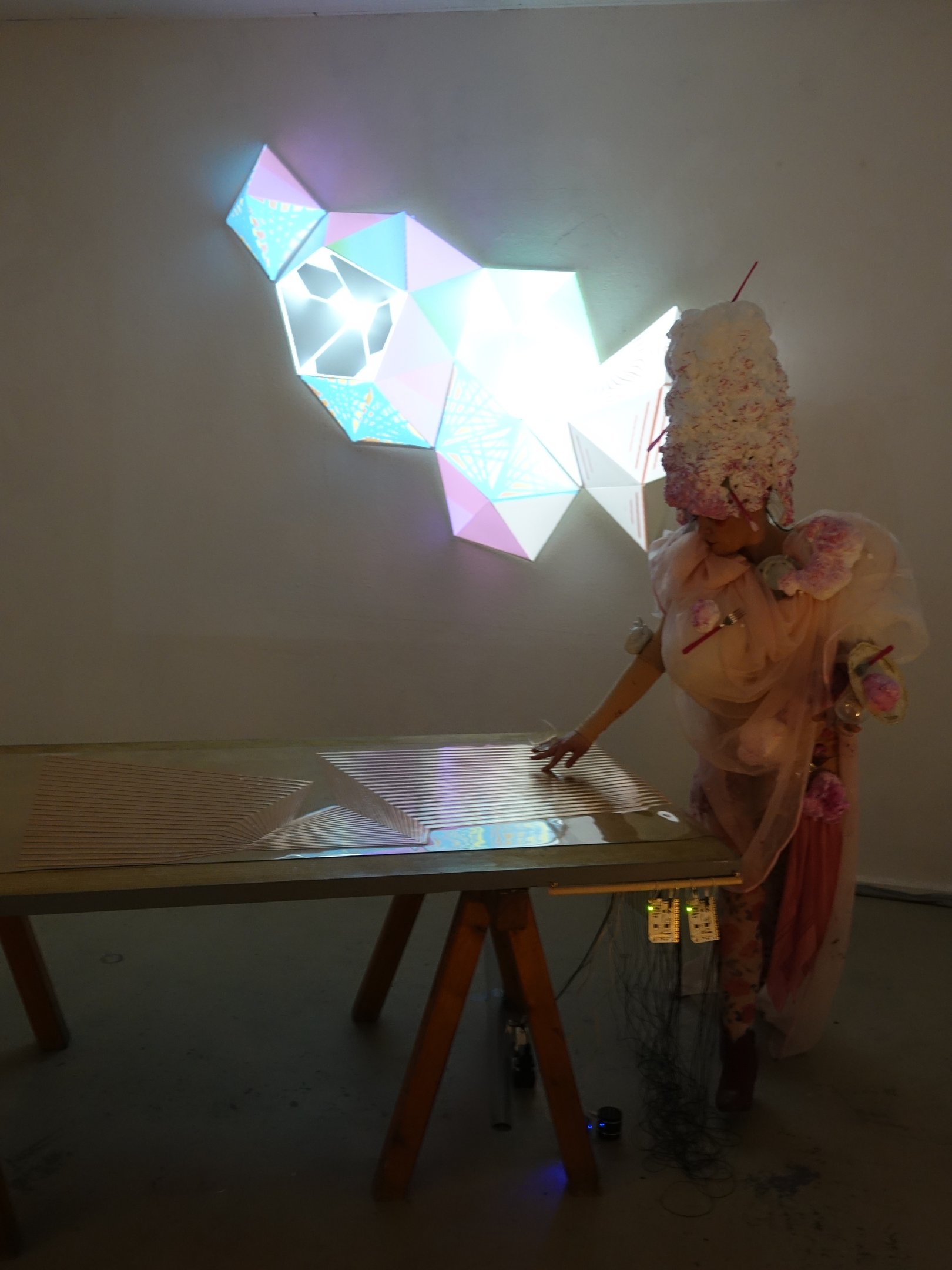
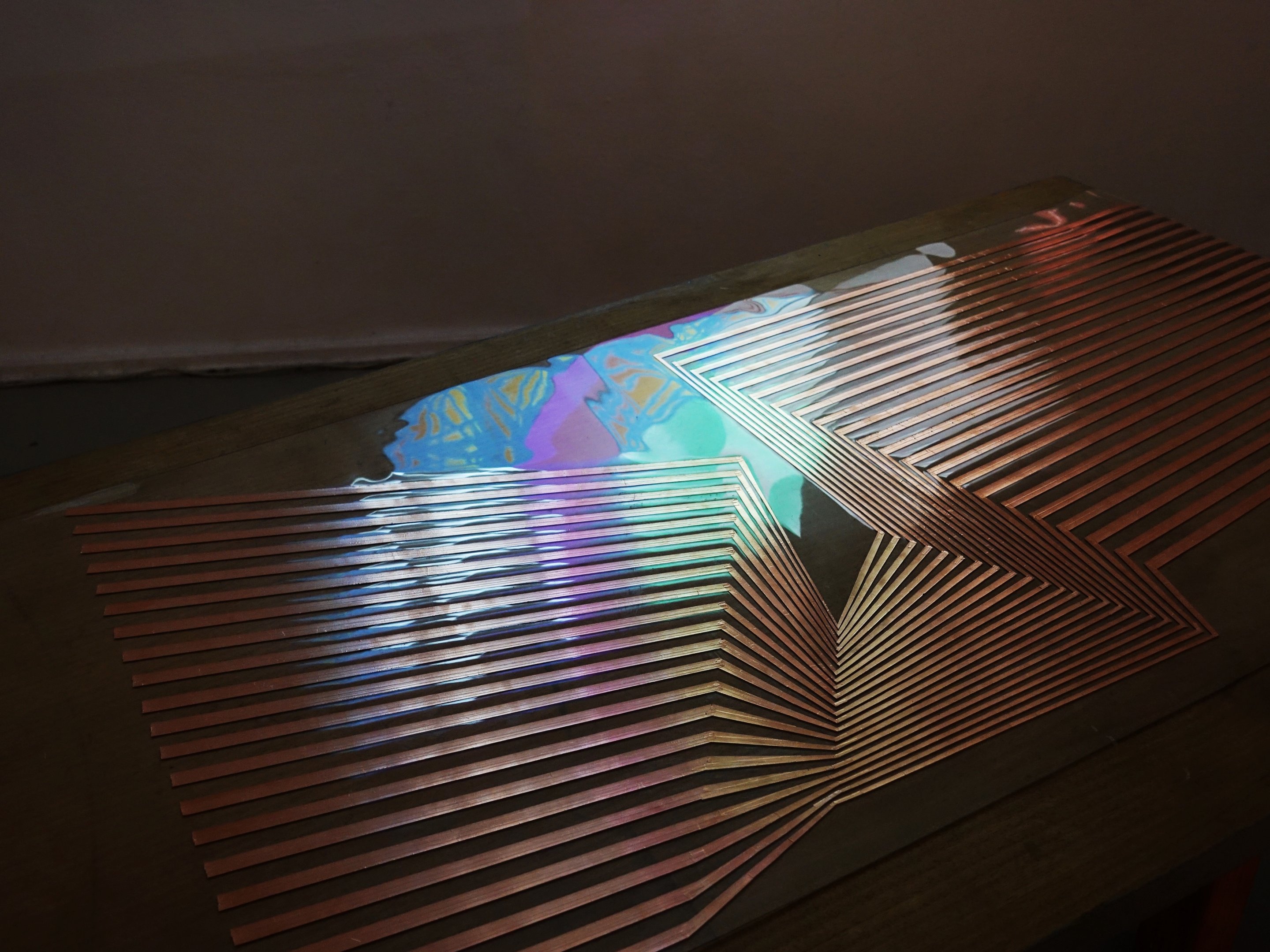
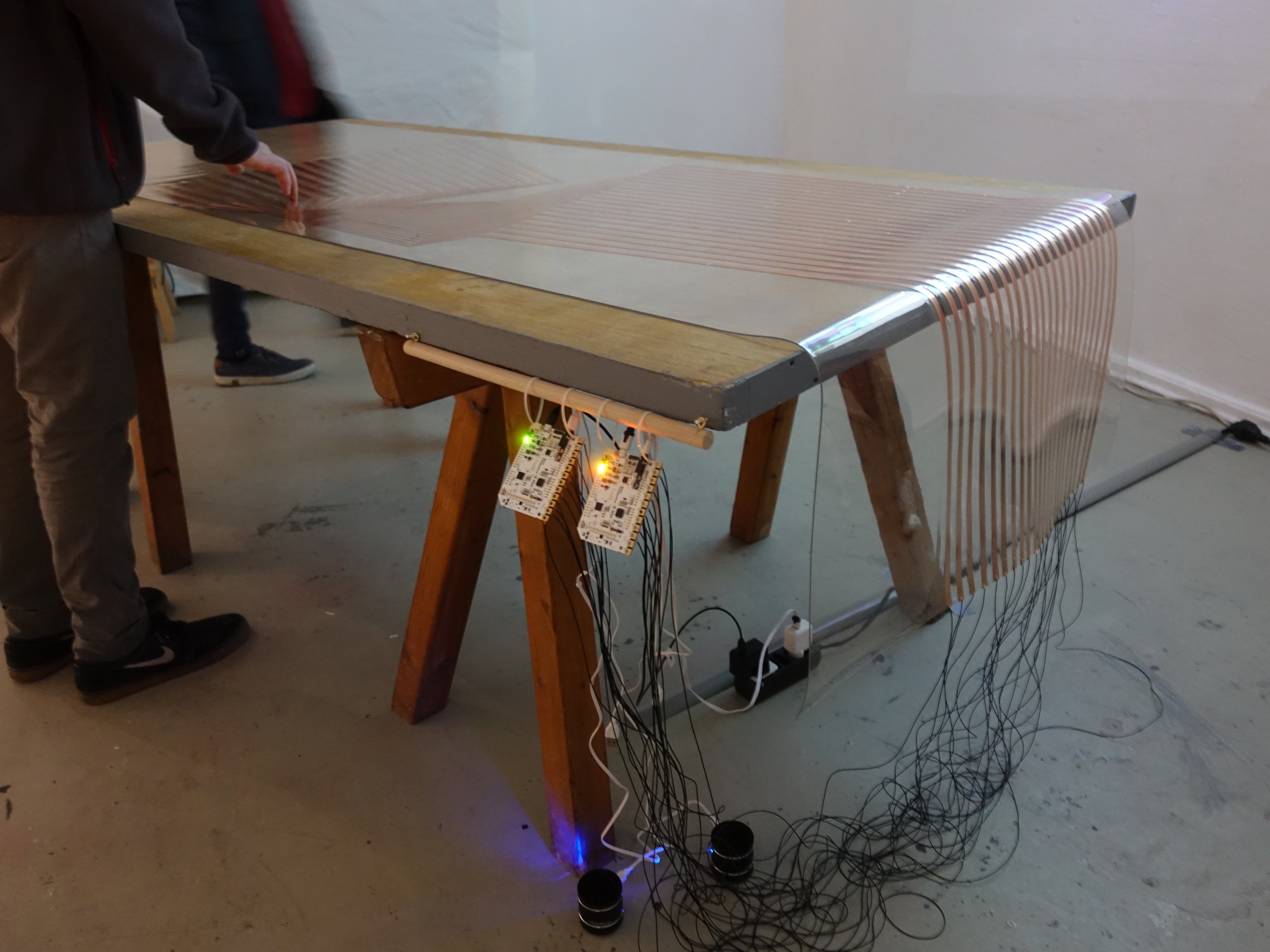
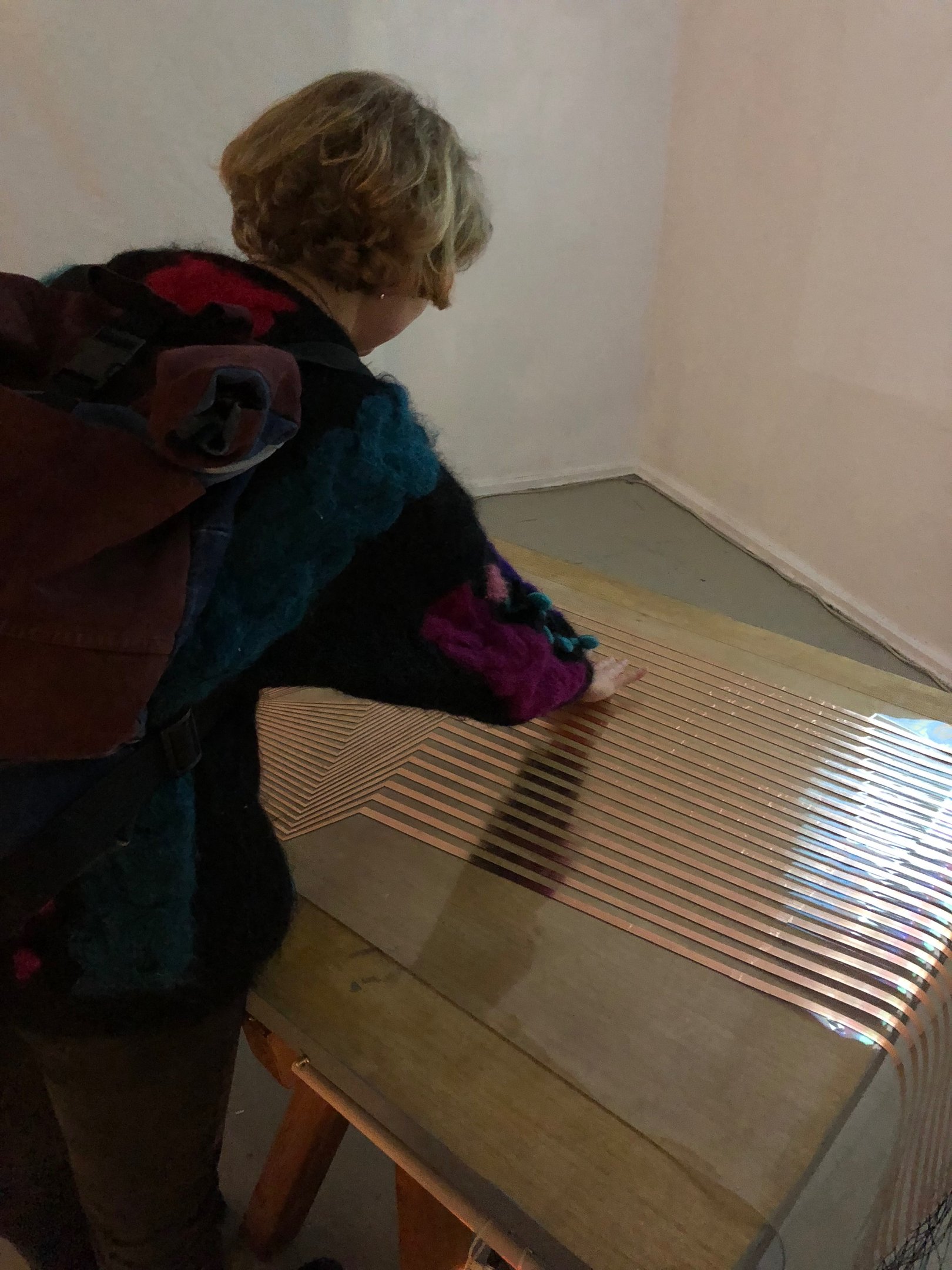
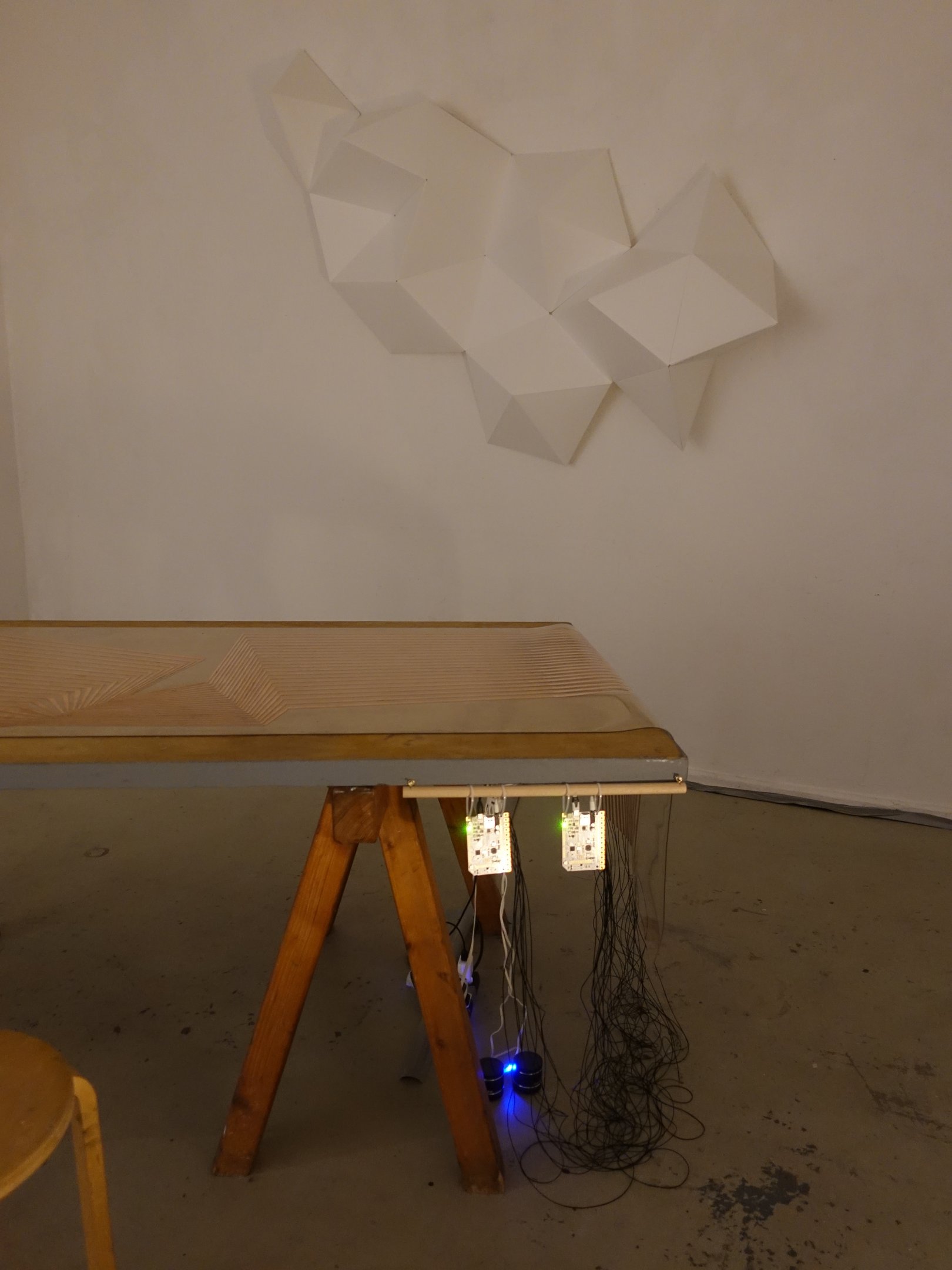
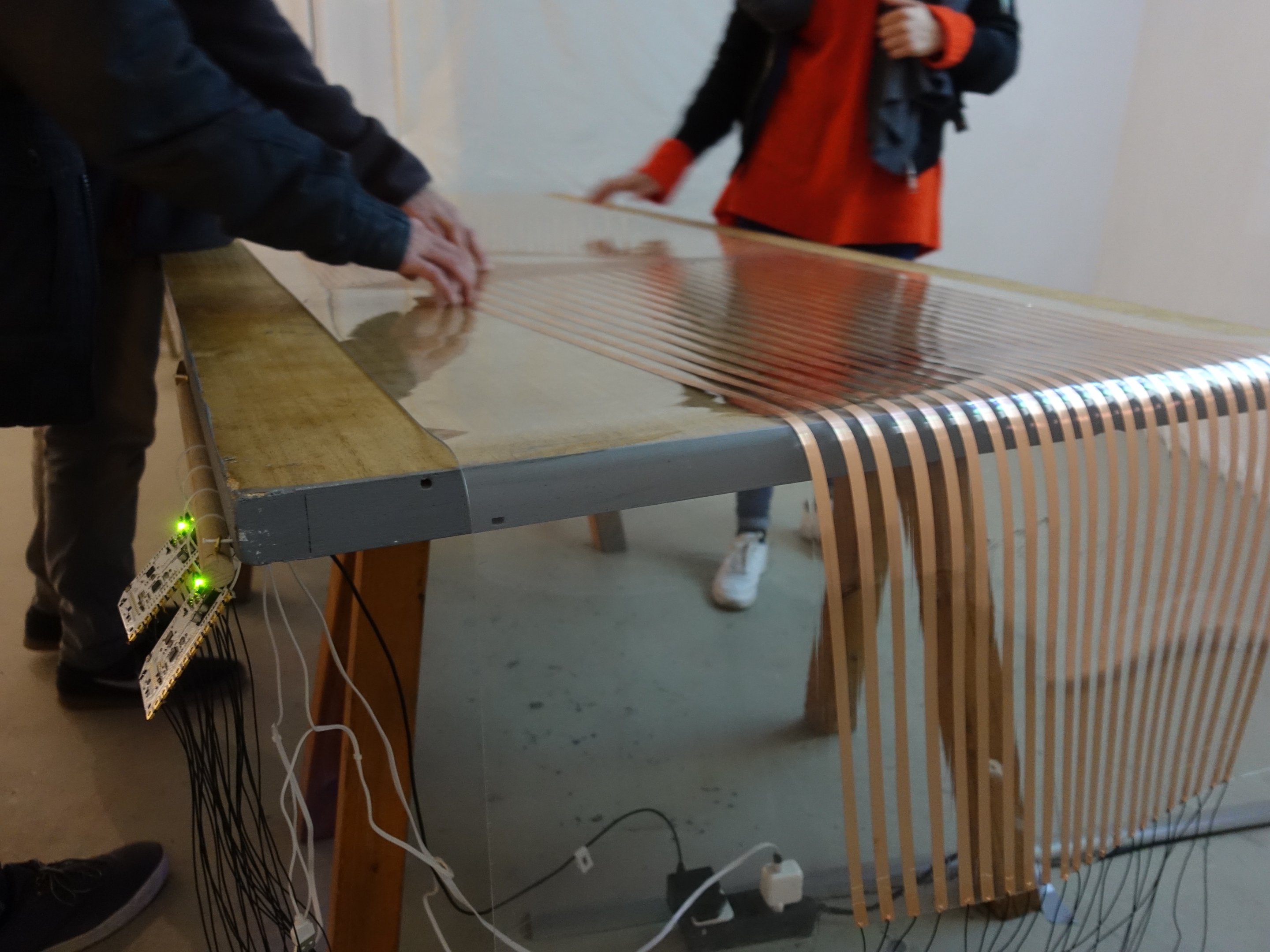
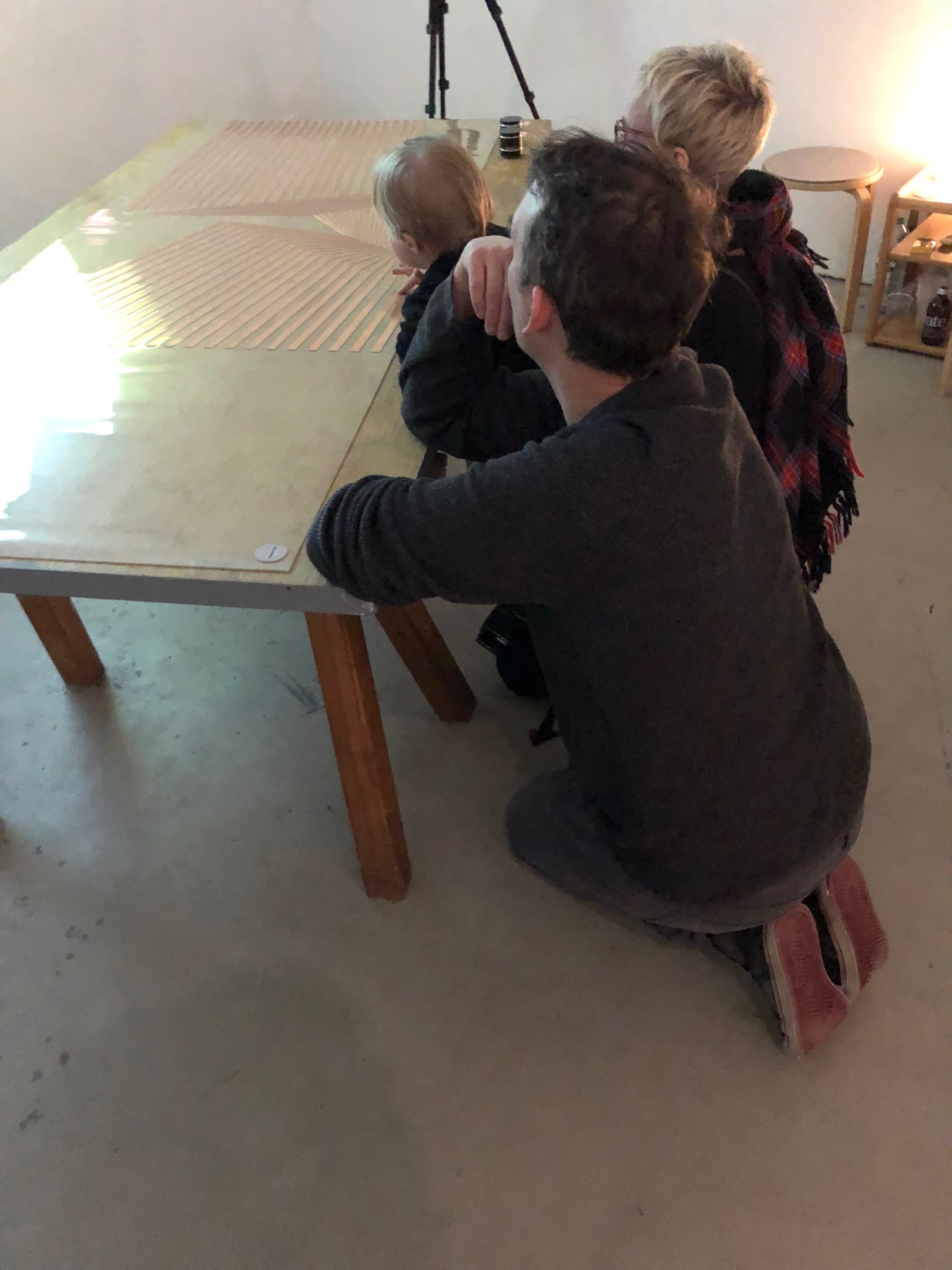
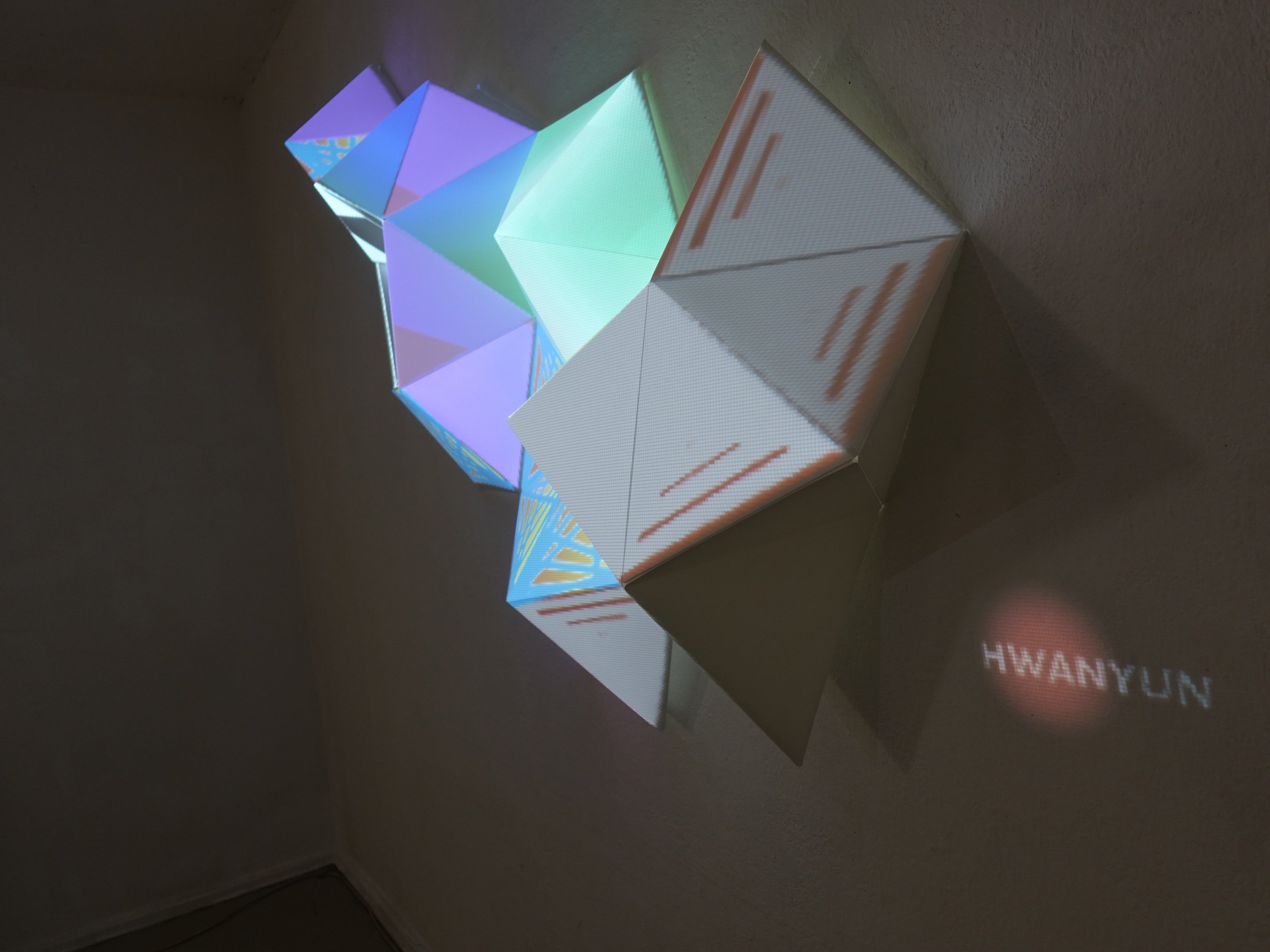
Three Pieces: Untitled I brings two works, placed apart in the space, into relation through the presence of its visitors. The polycarbonate work on the wall transforms the room's sound into light and colour; the copper work on a large wooden table returns touch as sound. Sound, light, and touch circulate between them rather than travelling in a single direction.
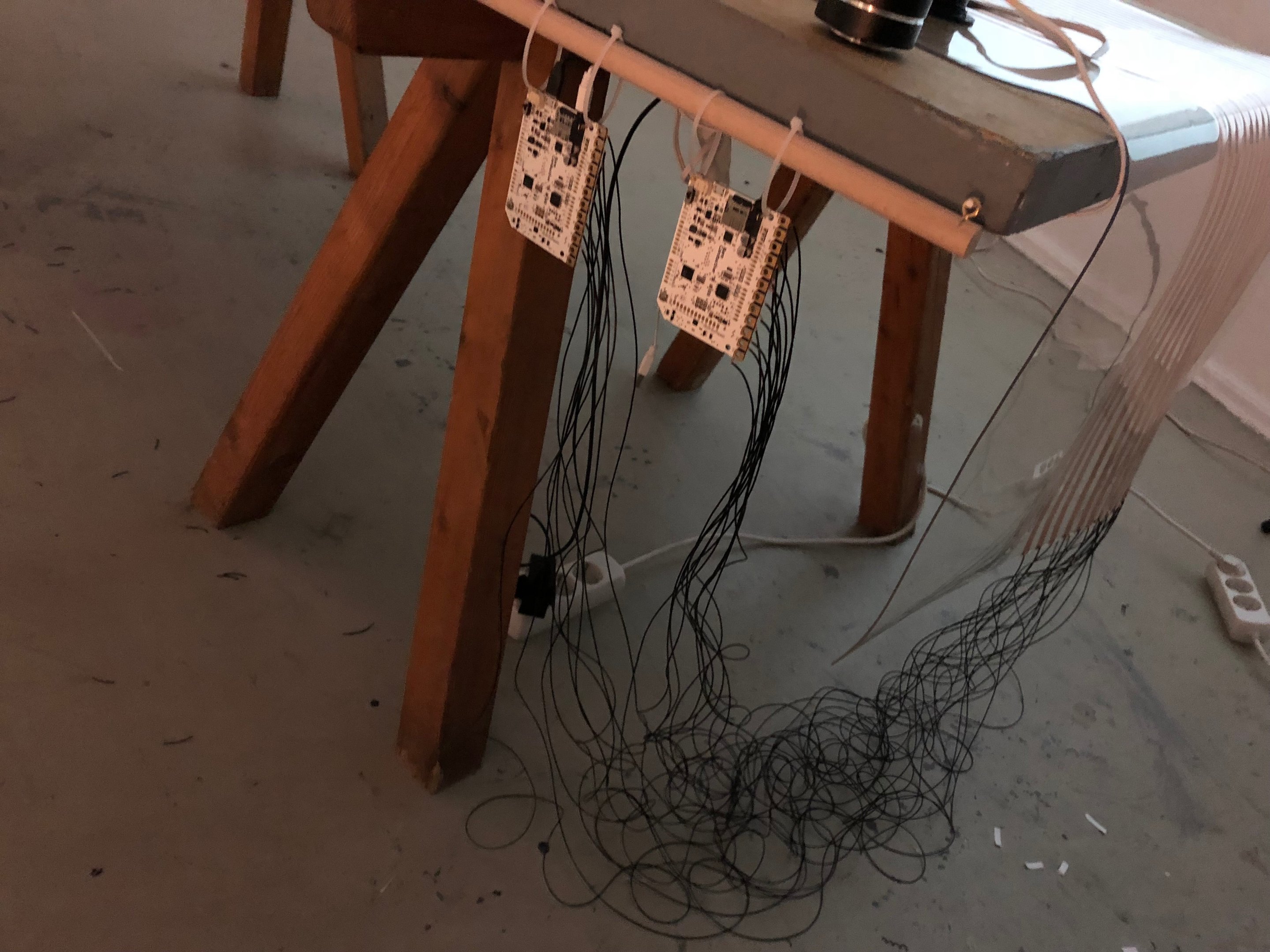
Ambient sound generated by visitors is registered by sensors and translated into shifting colour and intermittent light across the wall work. At the table, touch activates composed sound through the copper surface. This new sonic layer folds back into the room's acoustic field, amplifying the visual response and setting a wider wave of light in motion.
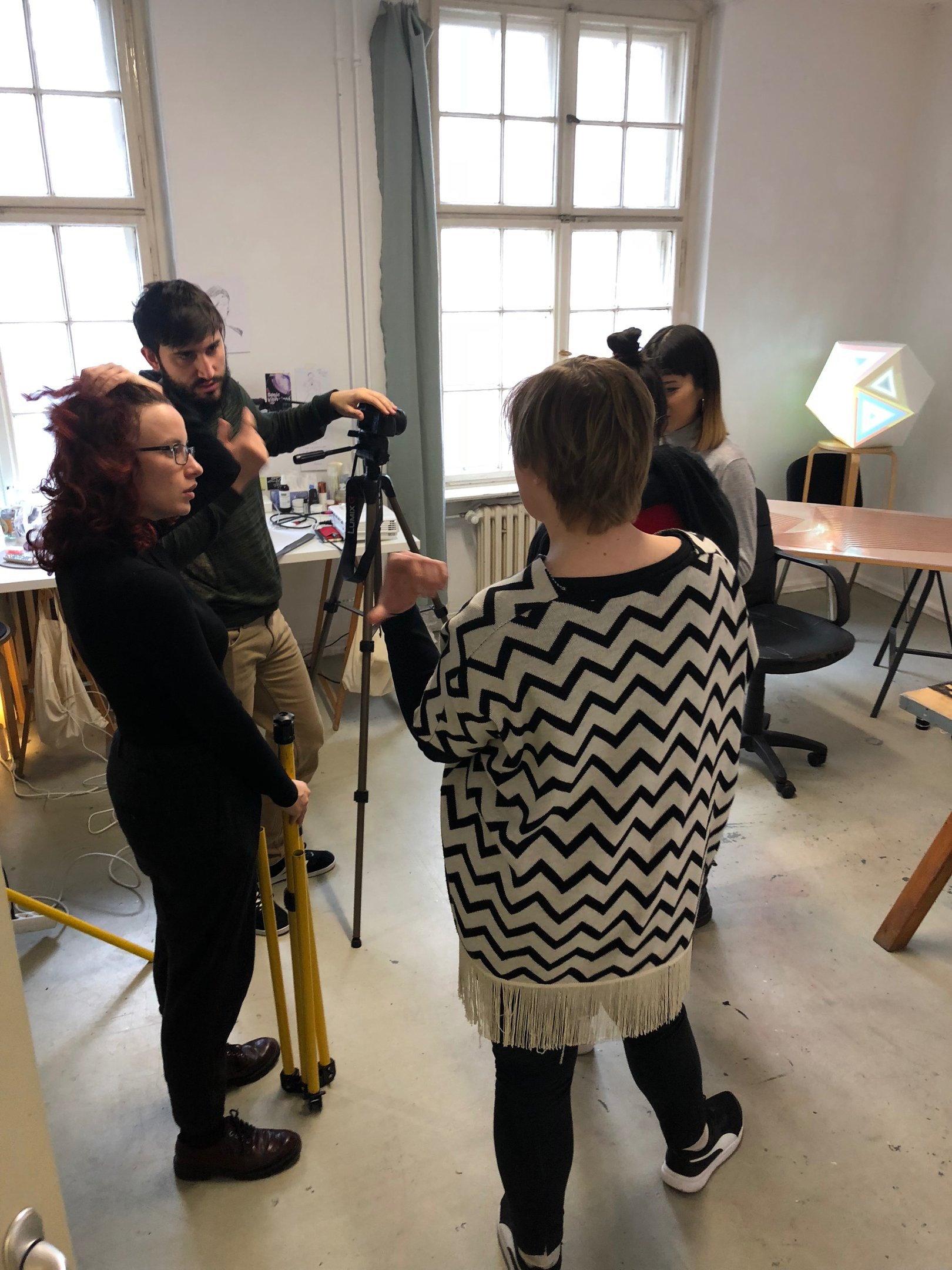
The work does not place viewers before a finished installation. Their presence is the condition that allows the circuit to operate: voice becomes signal, touch becomes transmission, and the two installations become responsive to one another. What appears is a temporary ecology of bodies, material, sound, and light.
〈Three Pieces: Untitled I〉는 공간 안에 떨어져 놓인 두 작업이 관객을 통해 관계를 맺는 설치다. 벽면의 폴리카보네이트 작업은 공간의 소리를 빛과 색으로 바꾸고, 대형 우드 테이블 위의 구리 작업은 관객의 접촉을 사운드로 되돌린다. 두 작업 사이에서 소리·빛·접촉은 한 방향으로 전달되지 않고 서로를 바꾸며 순환한다.
관객이 전시 공간에서 만드는 소리는 센서에 감지되어 색과 점멸의 변화로 번역되고, 벽면의 폴리카보네이트 작업 위에 투사된다. 테이블 위의 구리 표면에 가해진 접촉은 작곡된 사운드를 호출한다. 이 새로운 음향 층은 다시 공간의 소리와 섞여 시각적 반응을 증폭시키고, 설치 전체에 더 큰 빛의 파동을 발생시킨다.
작품은 관객을 완결된 설치 앞의 외부 관찰자로 두지 않는다. 관객의 존재가 있어야만 회로가 작동한다. 목소리는 신호가 되고, 접촉은 전달의 행위가 되며, 두 설치 작업은 서로에게 반응하기 시작한다. 이때 작품은 몸, 물질, 사운드, 빛이 잠시 형성하는 하나의 생태로 나타난다.